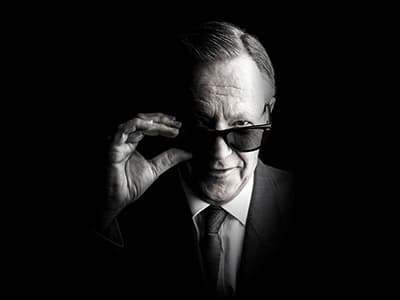
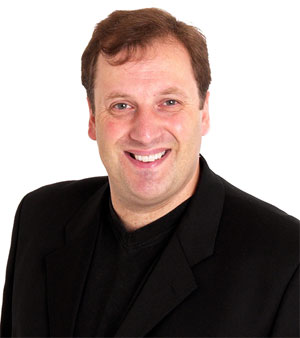
 Left - Matthew Brook. Cover - Fiona Campbell
What lyrical wax can one wipe on to the ACO that hasn't been already applied, not least by my good self? Quite simply, and unequivocally, it has to be one of the finest small orchestras on Earth, and I wouldn't be at all surprised, if one were to do a an exhaustive comparison, that the very same would prevail. ACO, ACO, ACO; oi, oi oi! but enough of my crass superlatives. Bach & Beyond is characteristic of the savvy of the ACO, in hooking their gentrified loyalist audience with Bach as bait, then slipping some challenging classical hardcore into the programme. In this way, without being in any way patronising, the ACO takes their disciples along with them, almost hanging on every note. They're intent on broadening our horizons, coaxing us out of our conservatism and complacency; qualities that tend to be, let's face it, endemic, if not epidemic. So, it's not just a good thing. It's a great thing.
And the ride is always thrilling. Indeed, it's the fact that the ACO itself seems so thrilled to be playing the work that makes it so for us. And it's not the instruments that make it so special, as special as the instruments (such as a 1759 Guadagnini violin) may be. it's the hands that play them. And the passion in the hearts that pump blood to those hands.
Just as we might hang on every note, the musicians watch intently for every gesture by their artistic director. These can be subtle, no doubt, as the maestro is so vigorously engaged in playing, himself. It lends a theatrical dimension to the performance. In the kind of slightly naughty, deliberately perverse, schoolboyish kind of way that's accounted for freaky haircuts and other small statements of individuality amongst the orchestra, Tognetti announced a programme deviation at the last-minute. 'Damn! Too late to cancel now.' So we get a little Shostakovich with our Bach.
Dmitri might have a rather more daunting surname than Johann, but me writes a mean Elegy. It is pregnant with melancholy, without ever succumbing to self-indulgent, unrelenting mournfulness; more a lament, perhaps, than anything else. I understand he composed it in a mere three days, whereas it sounds so hauntingly, achingly beautiful I would've easily believed three years. He wrote it, too, for string quartet, so this was a somewhat more expansive, spacious arrangement: eight violins, three violas, two oboes, bassoon, bass and three celli. It's in five movements, albeit continuous, and is in the minor key of C. In an orgy of personal plagiarism, he quotes liberally from earlier compositions, which has biographical significance, as these excerpts tend to refer to works which are very much markers for significant events in his life. This, of course, lends added poignancy. (By the way, the piece is also commonly known as Adagio, so don't be confused by any conflicting nomenclature.) Tognetti and co bring to it a tangible, almost prayerful respect, that truly evinces the very best from an exceptionally elegant, moving work.
But, of course, Mr T tricked us and insisted on reversing the programmatic polarity, playing Shostakovich's curious Polka first; a piece bordering on sarcastic, if not downright so. What was the method in Shostakovich's madness and cynicism? Let's put it in context. The polka was from the second act of his most popular ballet, The Age Of Gold. The scene for which the polka was written depicts a meeting of the League Of Nations. Enough said. If your musical tastes are broad, and extend to the coarseness of pop, you might even know it as Once Upon A Time In Geneva. Clearly, it's intent isn't lost on the ACO, who tilt it steeply towards its comical dissonance and dissidence. It threatens to descend into anarchy and that very threat, of danger and menace, makes it all the more exhilirating. This is the art of the ACO: to capture and distil the essence of what the composer had in mind; thorough research and visceral playing gets them there.
After being jolted from any soporific, post-prandial stasis by the Polka, then seduced into sadness by the Elegy, we were rewarded with a rich rendition of Bach's short mass; in other words, Missa Brevis (G Minor). That a devout Lutheran should involve himself in a musical phenomenon so inextricable from the Roman church might seem remarkable but, apparently, and somewhat against the grain of conventional wisdom, the liturgical distinctions, at least at the time, weren't all that great. In any case, with this mass in particular, Bach really goes for it, showing the full extent of his vocabulary & breathtaking compositional dexterity. But it's more than purely a showcase for an incorrigible showoff. It's satisfying, in the substantial way of a hearty German meal. All the moreso, once again, when delivered by the ACO. I hardly need to labour the point, or elaborate on the ACO's capabilities when it comes to Bach, as Tognetti alone has been much-lauded in that respect. A shining sidelight to this selection is that it brings together a quartet of superlative singers: two from Australia and two from Britain.
Sara Macliver is God's, and Australia's, gift to baroque. She's an enthusiast and is everywhere, including, regularly, alongside all our symphony orchestras. Better yet, she's no stranger to Bach's masses, or anything else, for that matter. If JS himself had chosen a soprano, he couldn't have gone past her: her voice as crisp, clean, clear and pure as driven snow. Similarly, her countrywoman, Fiona Campbell, who fulfilled the roles of mezzo-soprano and alto, as required, never struggles to assert her strong, warm timbre over the instruments. She's a second jewel in the crown of Australian vocal performance and is also at home and adept with JSB's hits and masses.
The blokes (or chaps, given they hail from the mother country) were animated; especially Matthew Brook (bass), whose delivery is assertive; commanding, even. Andrew Staples, tenor, sang as a chorister in St. Pauls, before winning a scholarship to Kings College, and he still looks the part, with his wide-eyed, youthful innocence. With his bright, lively tone, his & Macliver's, particularly, was a vocal marriage made in heaven.
The singers were all the more impressive for the fact they were charged with the daunting task of singing music commonly assigned to a much larger choir. There was certainly no sense of missing parts; far from it, their individual and collective clarity and precision was most edifying.
As with Shostakovich (how this typist wish he had a nickname), Bach's mass reprises much of his earlier works, without the slightest apology or self-consciousness. In many ways, it accentuates and underscores his talents for composition and arrangement, in the reworking. The result is, in short, consummate; Calvin Bowman's organ contributing in no small measure (dare I say, he knows the composer Bach-to-front).
In the 'conversation', of which Tognetti made much in pre-concert remarks, the next bold stroke was to interpolate Estonian composer, Arvo Part, who was happy, it seems, to kiss the hem of Bach's garment. His Summa, apart from being mercifully compact and eloquent by classical standards, is the very quintessence of elegant minimalism: there is nothing extraneous, superfluous or needlessly ornamental in this profound and sublime piece, which the ACO honours with the utmost, restraint, integrity and dignity. Tognetti's apparent penchant for sostenuto & talent for intuiting as well as expressing, the arc and depth of emotion required, assisted greatly the reading and evocation of contemplative, mystical melody. I imagine it's the solemnity of the work which RT hears as paying homage to and being in reverent dialogue with Bach's religious music.
Schoenberg's Litany, the slow third movement from his second (of four) string quartet(s), was imbued, by the ACO & the shattering vocals of Macliver, with all the blueness the text ('deep is the sadness that gloomily comes over me') demands (Schoenberg seems as concerned with as any poet). The strings shone throughout, too. There was some notably invigorated playing from assistant leader, violinist Satu Vanska.
Another glass of wine at interval, and we were launched into a fugal Bach motet; Lobet den Herrn. Since the ACO had employed, whether for fiscal or musical reasons, the smallest possible, one-voice-per-part, SATB choir, the very appearance of this work on the programme rekindles a now decades-old debate: how many voices were there in Bach's choir? Whatever the correct answer, this ensemble proved they had it covered with, I'd venture to reflect, the Aussie sheilas outshining and overpowering the Brit blokes. Not that it's a competition, but if there were orchestral ashes, we might well claim those, too.
Diana Burrell's 'Das Meer' needs no translation. From its first bars, one can hear the thundering roar and unforgiving tempest of the ocean. As with the preceding motet, it takes a (prelude and) fugal form; this, from a Norwich-born composer. And, as with the earlier mass, it borrows, textually, from the Lutheran bible. As much a musical painting as anything else, it ebbs, flows and swells as does the tide, in lunar servitude, mimicking the servitude of man, to God, as in Bach's momentous, ordered genuflection. The ACO embraces Burrell's accentuated dynamics with gusto, rising to the very considerable challenge of this 'players' music. All seafaring creatures great and small, flotillas of notes, danger and principal cellist, Timo, seemed utterly immersed. Stupendous!
The comfort and familiarity of JSB's Cantata posed the eternal, existential, almost unanswerable question, 'where are you going?'. It might have been written by Jean-Paul Sartre, if it hadn't been by an unknown poet, long before. It turns the reported words of Jesus on their head: a surprisingly radical move by the cantor of St. Thomas (Bach), in Leipzig, in the first quarter of the 18th-century. The opening bass aria drives home the brevity of the libretto brilliantly.
Obviously, Bach was, and is, the robust backbone of this tour. But Bach would be the backbone of any tour on which he appears. Bach has bite. But the programme was, as is typical of ACO determinations, made vital, interesting, even confronting, with the likes of Shostakovich, Part, Schoenberg and Burrell, whose music is deserving of more attention. And there's no small orchestral outfit better-prepared, equipped, or endowed, to bring it to our attention. Bach & potent text are the pervasive themes of this tour. Textual healing, perhaps?
Australian Chamber Orchestra
Bach and Beyond
Artistic Director and Lead Violin Richard Tognetti
Tour Details - 10 - 21 April
Canberra
Llewellyn Hall
Saturday 10 April, 8pm
Bookings 1800 444 444
Melbourne
The Arts Centre
Sunday 11 April, 2.30pm & Monday 12 April, 8pm
Bookings 1300 795 012
Adelaide
Town Hall
Tuesday 13 April, 8pm
Bookings 131 246
Perth
Concert Hall
Wednesday 14 April, 8pm
Bookings 08 9484 1133
Sydney
City Recital Hall
Saturday 17 April @ 8pm, Tuesday 20 April @ 8pm & Wednesday 21 April @ 7pm
Bookings 02 8256 2222
Concert Hall, Opera House
Sunday 18 April, 2.30pm
Bookings 02 9570 7777
Brisbane
QPAC
Monday 19 April, 8pm
Bookings 136 246